Education is not simply about remembering information for an examination—it is about understanding ideas and knowing how to apply them in real-life situations. Conceptual learning encourages students to understand the why and how behind a topic, while rote learning mainly focuses on memorising facts. A balanced approach may have its place, but meaningful understanding helps students develop skills that last beyond the classroom.
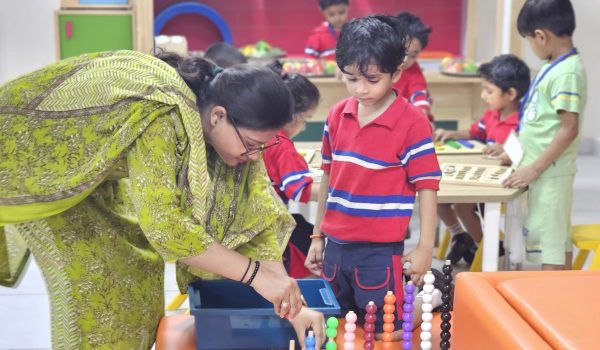
When students understand a concept, they are better equipped to explain it in their own words and apply it to different situations.
Concept-based education encourages learners to ask questions, analyse information, solve problems, and develop logical reasoning.
Information connected to understanding and experience can be easier to recall and use later than facts memorised only for an examination.
Whether solving a mathematical problem, understanding a scientific process, or analysing a situation, conceptual learning helps students transfer classroom knowledge into practical contexts.
At GD Goenka Public School CBR, meaningful education can encourage students to move beyond memorisation by connecting academic concepts with activities, inquiry, creativity, technology, and practical experiences. This approach supports the development of confident learners prepared to use their knowledge thoughtfully.
Preparing children for the future requires more than classroom learning. By nurturing critical thinking, communication, creativity, digital literacy, leadership, and emotional intelligence, parents and schools can help students build a strong foundation for lifelong success. At GD Goenka Public School, CBR, we are committed to shaping learners who are ready to excel in every stage of life.
©2026. All Rights Reserved to GD Goenka Chhibramau